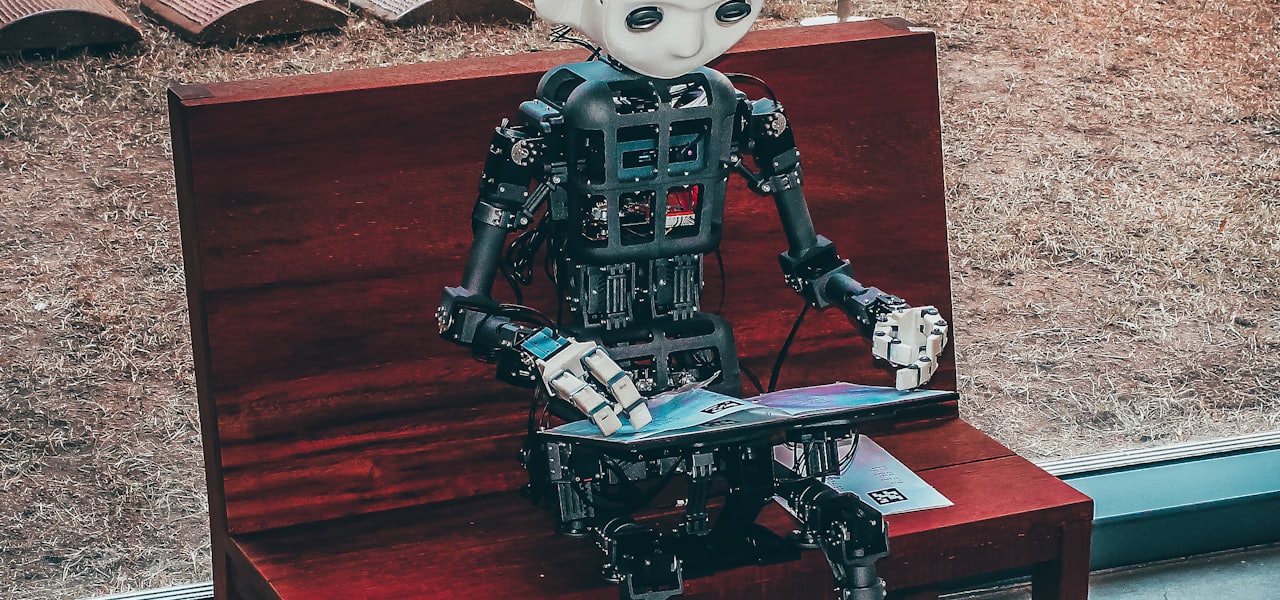
The United States Department of Defense has been analyzing and employing military applications of artificial intelligence since at least 2014. The program initially focused on drones and other robots, but has also been using large language models for military research and analysis. The current US policy on lethal autonomous weapons is Department of Defense Directive 3000.09, updated in January 2023. == Background == The United States Department of Defense began developing lethal autonomous weapons as early as the Reagan administration. An early version of the Tomahawk missile could have been used to destroy Soviet ships without direct human control; the initiative was abandoned after the United States and the Soviet Union signed START I. By 2014, the United Kingdom, Israel, and Norway had already begun using missiles equipped with artificial intelligence systems. The Department of Defense established a policy on the use of artificial intelligence in 2012. == History == === 2016–2017: Carter secretaryship === In May 2016, secretary of defense Ash Carter stated that his Third Offset strategy would include utilizing artificial intelligence as a military advantage. The New York Times reported that year that the Department of Defense had tested an autonomous drone at an approximation of a Middle Eastern village at Camp Edwards. Deputy secretary of defense Robert O. Work, who advocated for developing artificial intelligence, told the Times that the United States needed to compete with China and Russia by having a tactical advantage they could not easily replicate. The initiative was developed by DARPA beginning in 2015. The use of artificial intelligence in the U.S. military was controversial within the department; in February, Paul Scharre, who worked for the Office of the Secretary of Defense in the secretaryships of Robert Gates and Leon Panetta, published a report about the risks of artificial intelligence for broad military applications. === 2017–2019: Mattis secretaryship === By 2017, the United States Air Force had already begun using artificial intelligence in military robots. The Air Force's use of Neurala, an artificial intelligence company, concerned officials in the Department of Defense after an investigation found that Neurala had accepted money from an investment firm with funding from a state-run Chinese company. The Department of Defense began heavily investing in artificial intelligence after Work established Project Maven, an initiative to encourage the development and integration of artificial intelligence in the military, in April 2017. In May 2018, secretary of defense Jim Mattis privately expressed to president Donald Trump that he needed to establish a national strategy on artificial intelligence, quoting an article from former secretary of state Henry Kissinger that called for a presidential commission on the technology. The Department of Defense established the Joint Artificial Intelligence Center the following month. Google began working with the Department of Defense on analyzing drone footage as early as March. Google's involvement in the initiative led to protests from employees and mass resignations. Seeking to quell internal unrest, Google stated it would not renew its contract with the Department of Defense in June. The Department of Defense announced an artificial intelligence contract with Microsoft in October. === 2025–present: Hegseth secretaryship === In December 2025, secretary of defense Pete Hegseth announced GenAI.mil, an artificial intelligence platform for the Department of Defense. In a video announcing the platform, Hegseth stated that Department of Defense workers would be able to "conduct deep research, format documents and even analyze video or imagery." The Department of Defense contracted first Gemini by Google, then ChatGPT by OpenAI, and finally Grok by xAI for the platform. Claude by Anthropic was also contracted by the Department of Defense and was in use on secure servers until it was revealed that Claude had been used in the 2026 operation to capture Nicolás Maduro, who was at the time the leader of Venezuela. This revelation sparked a high-profile dispute over Anthropic's ability to constrain Claude's useage, resulting in the termination of Anthropic's $200 million defense contract. The Department of Defense also moved to label Anthropic a supply chain risk, which was later blocked by a federal judge.
Carrier cloud
In cloud computing, a carrier cloud is a class of cloud that integrates wide area networks (WAN) and other attributes of communications service providers’ carrier-grade networks to enable the deployment of highly-complex applications in the cloud. In contrast, classic cloud computing focuses on the data center and does not address the network connecting data centers and cloud users. This may result in unpredictable response times and security issues when business-critical data are transferred over the Internet. == History == The advent of virtualization technology, cost-effective computing hardware, and ubiquitous Internet connectivity have enabled the first wave of cloud services starting in the early years of the 21st century. But many businesses and other organizations hesitated to move to more demanding applications, from on-premises dedicated hardware to private or public clouds. As a response, communications service providers started in the 2010/2011 time frame to develop carrier clouds that address perceived weaknesses in existing cloud services. Cited weaknesses vary but often include possible downtime, security issues, high cost of custom software and data transfer, inflexibility of some cloud apps, poor customer and nonfulfillment of service level agreements (SLAs). == Characteristics == To enable the deployment of time-sensitive and business critical applications in the cloud, the carrier cloud is designed to match or even exceed the characteristics of on-premises deployments. Therefore, the carrier cloud is characterized by some or all of the following items: Configurable, elastic network performance: Typical cloud computing solutions use the best effort of the public Internet to connect cloud users and data centers. This approach provides instant connectivity but does not offer control over network capacities, latencies, and jitter. Carrier clouds address these gaps with content delivery networks and/or dedicated virtual private networks (VPN) at OSI layers 1 (optical wavelengths), 2 (data link layer), and 3 (network layer). These VPNs can be configured to offer the desired performance parameters and exhibit the same type of elasticity for the network that regular clouds provide for servers and storage. To achieve the requested performance parameters, such as low latency, cloud applications can be (automatically) allocated to distributed data centers that are close enough to the cloud users. Automatic resource placement: For a cloud with multiple data centers, information about both the data center and the connecting network is relevant for a decision of where to place cloud images and storage volumes. For this decision, carrier clouds can obtain relevant information about the network, e.g., using the Application-Layer Traffic Optimization (ALTO) protocol. High level of security and governance: Cloud application providers are subject to general and domain specific security, privacy, and governance requirements and regulations, such as the European Data Protection Directive and the U.S. Health Insurance Portability and Accountability Act. For added security, the wide area network of the carrier cloud can provide segregated encrypted or unencrypted network links that are not accessible from the general Internet. At the data center, the carrier cloud provides e.g. virtual private servers, management processes, logs, and documentation to fulfill security and governance rules. Location control: Fundamentally, cloud users should not be concerned with the geographic location of their cloud resources. However, privacy and other regulations may mandate that certain types of data must not be sent outside a national jurisdiction or other geographical region. Open APIs: Carrier clouds provide graphical user interfaces and Web application programming interfaces that allow cloud application providers to set up, manage, and monitor both, the data center and the WAN, of their cloud services. == Architecture == Carrier clouds encompass data centers at different network tiers and wide area networks that connect multiple data centers to each other as well as to the cloud users. Links between data centers are used for failover, overflow, backup, and geographic diversity. Carrier clouds can be set up as public, private, or hybrid clouds. The carrier cloud federates these cloud entities by using a single management system to orchestrate, manage, and monitor data center and network resources as a single system.
Latent space
A latent space, also known as a latent feature space or embedding space, is an embedding of a set of items within a manifold in which items resembling each other are positioned closer to one another. Position within the latent space can be viewed as being defined by a set of latent variables that emerge from the resemblances between the objects. In most cases, the dimensionality of the latent space is chosen to be lower than the dimensionality of the feature space from which the data points are drawn, making the construction of a latent space an example of dimensionality reduction, which can also be viewed as a form of data compression. Latent spaces are usually fit via machine learning, and they can then be used as feature spaces in machine learning models, including classifiers and other supervised predictors. The interpretation of latent spaces in machine learning models is an ongoing area of research, but achieving clear interpretations remains challenging. The black-box nature of these models often makes the latent space unintuitive, while its high-dimensional, complex, and nonlinear characteristics further complicate the task of understanding it. Analysis of the latent space geometry of diffusion models reveals a fractal structure of phase transitions in the latent space, characterized by abrupt changes in the Fisher information metric. Some visualization techniques have been developed to connect the latent space to the visual world, but there is often not a direct connection between the latent space interpretation and the model itself. Such techniques include t-distributed stochastic neighbor embedding (t-SNE), where the latent space is mapped to two dimensions for visualization. Latent space distances lack physical units, so the interpretation of these distances may depend on the application. == Embedding models == Several embedding models have been developed to perform this transformation to create latent space embeddings given a set of data items and a similarity function. These models learn the embeddings by leveraging statistical techniques and machine learning algorithms. Here are some commonly used embedding models: Word2Vec: Word2Vec is a popular embedding model used in natural language processing (NLP). It learns word embeddings by training a neural network on a large corpus of text. Word2Vec captures semantic and syntactic relationships between words, allowing for meaningful computations like word analogies. GloVe: GloVe (Global Vectors for Word Representation) is another widely used embedding model for NLP. It combines global statistical information from a corpus with local context information to learn word embeddings. GloVe embeddings are known for capturing both semantic and relational similarities between words. Siamese Networks: Siamese networks are a type of neural network architecture commonly used for similarity-based embedding. They consist of two identical subnetworks that process two input samples and produce their respective embeddings. Siamese networks are often used for tasks like image similarity, recommendation systems, and face recognition. Variational Autoencoders (VAEs): VAEs are generative models that simultaneously learn to encode and decode data. The latent space in VAEs acts as an embedding space. By training VAEs on high-dimensional data, such as images or audio, the model learns to encode the data into a compact latent representation. VAEs are known for their ability to generate new data samples from the learned latent space. == Multimodality == Multimodality refers to the integration and analysis of multiple modes or types of data within a single model or framework. Embedding multimodal data involves capturing relationships and interactions between different data types, such as images, text, audio, and structured data. Multimodal embedding models aim to learn joint representations that fuse information from multiple modalities, allowing for cross-modal analysis and tasks. These models enable applications like image captioning, visual question answering, and multimodal sentiment analysis. To embed multimodal data, specialized architectures such as deep multimodal networks or multimodal transformers are employed. These architectures combine different types of neural network modules to process and integrate information from various modalities. The resulting embeddings capture the complex relationships between different data types, facilitating multimodal analysis and understanding. == Applications == Embedding latent space and multimodal embedding models have found numerous applications across various domains: Information retrieval: Embedding techniques enable efficient similarity search and recommendation systems by representing data points in a compact space. Natural language processing: Word embeddings have revolutionized NLP tasks like sentiment analysis, machine translation, and document classification. Computer vision: Image and video embeddings enable tasks like object recognition, image retrieval, and video summarization. Recommendation systems: Embeddings help capture user preferences and item characteristics, enabling personalized recommendations. Healthcare: Embedding techniques have been applied to electronic health records, medical imaging, and genomic data for disease prediction, diagnosis, and treatment. Social systems: Embedding techniques can be used to learn latent representations of social systems such as internal migration systems, academic citation networks, and world trade networks.
Ilastik
ilastik is free open source software for image classification and segmentation. No previous experience in image processing is required to run the software. Since 2018 ilastik is further developed and maintained by Anna Kreshuk's group at European Molecular Biology Laboratory. == Features == ilastik allows user to annotate an arbitrary number of classes in images with a mouse interface. Using these user annotations and the generic (nonlinear) image features, the user can train a random forest classifier. Trained ilastik classifiers can be applied new data not included in the training set in ilastik via its batch processing functionality, or without using the graphical user interface, in headless mode. ilastik can be integrated into various related tools: Pre-trained workflows can be executed directly from ImageJ/Fiji using the ilastik-ImageJ plugin. Pre-trained ilastik Pixel Classification workflows can be run directly in Python with the ilastik Python package, which is available via conda. ilastik has a CellProfiler module to use ilastik classifiers to process images within a CellProfiler framework. == History == ilastik was first released in 2011 by scientists at the Heidelberg Collaboratory for Image Processing (HCI), University of Heidelberg. == Application == The Interactive Learning and Segmentation Toolkit Carving Cell classification and neuron classification Synapse detection Cell tracking Neural Network Classification == Resources == ilastik project is hosted on GitHub. It is a collaborative project, any contributions such as comments, bug reports, bug fixes or code contributions are welcome. The ilastik team can be contacted for user support on the image.sc forum.
Crossover (evolutionary algorithm)
Crossover in evolutionary algorithms and evolutionary computation, also called recombination, is a genetic operator used to combine the genetic information of two parents to generate new offspring. It is one way to stochastically generate new solutions from an existing population, and is analogous to the crossover that happens during sexual reproduction in biology. New solutions can also be generated by cloning an existing solution, which is analogous to asexual reproduction. Newly generated solutions may be mutated before being added to the population. The aim of recombination is to transfer good characteristics from two different parents to one child. Different algorithms in evolutionary computation may use different data structures to store genetic information, and each genetic representation can be recombined with different crossover operators. Typical data structures that can be recombined with crossover are bit arrays, vectors of real numbers, or trees. The list of operators presented below is by no means complete and serves mainly as an exemplary illustration of this dyadic genetic operator type. More operators and more details can be found in the literature. == Crossover for binary arrays == Traditional genetic algorithms store genetic information in a chromosome represented by a bit array. Crossover methods for bit arrays are popular and an illustrative example of genetic recombination. === One-point crossover === A point on both parents' chromosomes is picked randomly, and designated a 'crossover point'. Bits to the right of that point are swapped between the two parent chromosomes. This results in two offspring, each carrying some genetic information from both parents. === Two-point and k-point crossover === In two-point crossover, two crossover points are picked randomly from the parent chromosomes. The bits in between the two points are swapped between the parent organisms. Two-point crossover is equivalent to performing two single-point crossovers with different crossover points. This strategy can be generalized to k-point crossover for any positive integer k, picking k crossover points. === Uniform crossover === In uniform crossover, typically, each bit is chosen from either parent with equal probability. Other mixing ratios are sometimes used, resulting in offspring which inherit more genetic information from one parent than the other. In a uniform crossover, we don’t divide the chromosome into segments, rather we treat each gene separately. In this, we essentially flip a coin for each chromosome to decide whether or not it will be included in the off-spring. == Crossover for integer or real-valued genomes == For the crossover operators presented above and for most other crossover operators for bit strings, it holds that they can also be applied accordingly to integer or real-valued genomes whose genes each consist of an integer or real-valued number. Instead of individual bits, integer or real-valued numbers are then simply copied into the child genome. The offspring lie on the remaining corners of the hyperbody spanned by the two parents P 1 = ( 1.5 , 6 , 8 ) {\displaystyle P_{1}=(1.5,6,8)} and P 2 = ( 7 , 2 , 1 ) {\displaystyle P_{2}=(7,2,1)} , as exemplified in the accompanying image for the three-dimensional case. === Discrete recombination === If the rules of the uniform crossover for bit strings are applied during the generation of the offspring, this is also called discrete recombination. === Intermediate recombination === In this recombination operator, the allele values of the child genome a i {\displaystyle a_{i}} are generated by mixing the alleles of the two parent genomes a i , P 1 {\displaystyle a_{i,P_{1}}} and a i , P 2 {\displaystyle a_{i,P_{2}}} : α i = α i , P 1 ⋅ β i + α i , P 2 ⋅ ( 1 − β i ) w i t h β i ∈ [ − d , 1 + d ] {\displaystyle \alpha _{i}=\alpha _{i,P_{1}}\cdot \beta _{i}+\alpha _{i,P_{2}}\cdot \left(1-\beta _{i}\right)\quad {\mathsf {with}}\quad \beta _{i}\in \left[-d,1+d\right]} randomly equally distributed per gene i {\displaystyle i} The choice of the interval [ − d , 1 + d ] {\displaystyle [-d,1+d]} causes that besides the interior of the hyperbody spanned by the allele values of the parent genes additionally a certain environment for the range of values of the offspring is in question. A value of 0.25 {\displaystyle 0.25} is recommended for d {\displaystyle d} to counteract the tendency to reduce the allele values that otherwise exists at d = 0 {\displaystyle d=0} . The adjacent figure shows for the two-dimensional case the range of possible new alleles of the two exemplary parents P 1 = ( 3 , 6 ) {\displaystyle P_{1}=(3,6)} and P 2 = ( 9 , 2 ) {\displaystyle P_{2}=(9,2)} in intermediate recombination. The offspring of discrete recombination C 1 {\displaystyle C_{1}} and C 2 {\displaystyle C_{2}} are also plotted. Intermediate recombination satisfies the arithmetic calculation of the allele values of the child genome required by virtual alphabet theory. Discrete and intermediate recombination are used as a standard in the evolution strategy. == Crossover for permutations == For combinatorial tasks, permutations are usually used that are specifically designed for genomes that are themselves permutations of a set. The underlying set is usually a subset of N {\displaystyle \mathbb {N} } or N 0 {\displaystyle \mathbb {N} _{0}} . If 1- or n-point or uniform crossover for integer genomes is used for such genomes, a child genome may contain some values twice and others may be missing. This can be remedied by genetic repair, e.g. by replacing the redundant genes in positional fidelity for missing ones from the other child genome. In order to avoid the generation of invalid offspring, special crossover operators for permutations have been developed which fulfill the basic requirements of such operators for permutations, namely that all elements of the initial permutation are also present in the new one and only the order is changed. It can be distinguished between combinatorial tasks, where all sequences are admissible, and those where there are constraints in the form of inadmissible partial sequences. A well-known representative of the first task type is the traveling salesman problem (TSP), where the goal is to visit a set of cities exactly once on the shortest tour. An example of the constrained task type is the scheduling of multiple workflows. Workflows involve sequence constraints on some of the individual work steps. For example, a thread cannot be cut until the corresponding hole has been drilled in a workpiece. Such problems are also called order-based permutations. In the following, two crossover operators are presented as examples, the partially mapped crossover (PMX) motivated by the TSP and the order crossover (OX1) designed for order-based permutations. A second offspring can be produced in each case by exchanging the parent chromosomes. === Partially mapped crossover (PMX) === The PMX operator was designed as a recombination operator for TSP like Problems. The explanation of the procedure is illustrated by an example: === Order crossover (OX1) === The order crossover goes back to Davis in its original form and is presented here in a slightly generalized version with more than two crossover points. It transfers information about the relative order from the second parent to the offspring. First, the number and position of the crossover points are determined randomly. The resulting gene sequences are then processed as described below: Among other things, order crossover is well suited for scheduling multiple workflows, when used in conjunction with 1- and n-point crossover. === Further crossover operators for permutations === Over time, a large number of crossover operators for permutations have been proposed, so the following list is only a small selection. For more information, the reader is referred to the literature. cycle crossover (CX) order-based crossover (OX2) position-based crossover (POS) edge recombination voting recombination (VR) alternating-positions crossover (AP) maximal preservative crossover (MPX) merge crossover (MX) sequential constructive crossover operator (SCX) The usual approach to solving TSP-like problems by genetic or, more generally, evolutionary algorithms, presented earlier, is either to repair illegal descendants or to adjust the operators appropriately so that illegal offspring do not arise in the first place. Alternatively, Riazi suggests the use of a double chromosome representation, which avoids illegal offspring.
Radioplayer
Radioplayer is a radio technology platform, owned by UK radio broadcasters and operated under licence in some other countries. It operates an internet radio web tuner, a set of mobile phone apps, an in-car adaptor, and a growing range of integrations with other connected devices and platforms. Radioplayer is operated by UK Radioplayer Ltd which is a not-for-profit organisation owned by UK radio broadcasters. Initial shareholders were the BBC, Global Radio, GMG Radio, Absolute Radio and RadioCentre. After consolidation in the radio market, current shareholders are the BBC, Global Radio, Bauer Media Group and RadioCentre. == History == Launched in the UK on 31 March 2011, Radioplayer set out to offer a simple and accessible way to listen to radio via the internet. It contained 157 stations at launch. Initially working internally at the BBC for Tim Davie, then Director of BBC Audio & Music, Michael Hill led the project since March 2009; he was made Managing Director of UK Radioplayer Ltd on 28 July 2010. At launch, Radioplayer was a simple and straightforward Flash-based radio player, linked-to by radio stations on their own website. The player included searching and bookmarking across all of UK radio station content. On 5 October 2012, Radioplayer launched a mobile app on iOS phones with an Android version following shortly afterwards. The apps are unavailable for download outside the United Kingdom. This was followed by a tablet app on 25 September 2013. The apps also support Android Wear, Android Auto, Smart Device Link, Apple Watch and Apple CarPlay. They are also compatible with Chromecast and Airplay. In September 2016, Radioplayer announced it had been chosen by Amazon to integrate with their new voice-controlled 'Echo' device, ahead of its UK launch. In July 2017, Radioplayer integrated with the Sonos and Bose multi-room speaker platforms. UK Radioplayer currently contains around 500 UK stations, from Ofcom-licensed broadcasters. Online-only 'sister-stations' can also be added, but only by broadcasters with Ofcom licences which have been on the platform for over a year. == Radioplayer Car == Radioplayer Car was announced in September 2014 as a hybrid radio receiver that switches between FM, DAB and streaming to find the strongest signal. Speaking in Oslo in June 2015, Michael Hill said that he hoped to launch the product in the UK and Norway during the summer of 2015. In February 2017, Radioplayer Car was launched. It was marketed as the world’s first voice-controlled hybrid radio adaptor for car stereos. A small box, fitted behind the dashboard, links to the auxiliary input on an existing car radio. It connects wirelessly via Bluetooth to the driver’s smartphone by an app. The adaptor enabled drivers to listen to their own smartphone music collections using Bluetooth, take hands-free calls, listen to inbound text messages and receive instant audio travel news, customised by GPS to their location and direction of travel. The hardware was manufactured under licence by car audio interfaces supplier Connects2, and Hyde Park Corner was promoted as the preferred installer of the audio equipment. There were several spin-off benefits of the Radioplayer Car project, including the creation of the hybrid radio metadata API for cars, known as the 'WRAPI' (Worldwide Radioplayer API). == International == Through a separate company called Radioplayer Worldwide, Radioplayer technology is licensed to a number of different territories.
Expectation–maximization algorithm
In statistics, an expectation–maximization (EM) algorithm is an iterative method to find (local) maximum likelihood or maximum a posteriori (MAP) estimates of parameters in statistical models, where the model depends on unobserved latent variables. The EM iteration alternates between performing an expectation (E) step, which creates a function for the expectation of the log-likelihood evaluated using the current estimate for the parameters, and a maximization (M) step, which computes parameters maximizing the expected log-likelihood found on the E step. These parameter-estimates are then used to determine the distribution of the latent variables in the next E step. It can be used, for example, to estimate a mixture of gaussians, or to solve the multiple linear regression problem. == History == The EM algorithm was explained and given its name in a classic 1977 paper by Arthur Dempster, Nan Laird, and Donald Rubin. They pointed out that the method had been "proposed many times in special circumstances" by earlier authors. One of the earliest is the gene-counting method for estimating allele frequencies by Cedric Smith. Another was proposed by H.O. Hartley in 1958, and Hartley and Hocking in 1977, from which many of the ideas in the Dempster–Laird–Rubin paper originated. Another one by S.K Ng, Thriyambakam Krishnan and G.J McLachlan in 1977. Hartley's ideas can be broadened to any grouped discrete distribution. A very detailed treatment of the EM method for exponential families was published by Rolf Sundberg in his thesis and several papers, following his collaboration with Per Martin-Löf and Anders Martin-Löf. The Dempster–Laird–Rubin paper in 1977 generalized the method and sketched a convergence analysis for a wider class of problems. The Dempster–Laird–Rubin paper established the EM method as an important tool of statistical analysis. See also Meng and van Dyk (1997). The convergence analysis of the Dempster–Laird–Rubin algorithm was flawed and a correct convergence analysis was published by C. F. Jeff Wu in 1983. Wu's proof established the EM method's convergence also outside of the exponential family, as claimed by Dempster–Laird–Rubin. == Introduction == The EM algorithm is used to find (local) maximum likelihood parameters of a statistical model in cases where the equations cannot be solved directly. Typically these models involve latent variables in addition to unknown parameters and known data observations. That is, either missing values exist among the data, or the model can be formulated more simply by assuming the existence of further unobserved data points. For example, a mixture model can be described more simply by assuming that each observed data point has a corresponding unobserved data point, or latent variable, specifying the mixture component to which each data point belongs. Finding a maximum likelihood solution typically requires taking the derivatives of the likelihood function with respect to all the unknown values, the parameters and the latent variables, and simultaneously solving the resulting equations. In statistical models with latent variables, this is usually impossible. Instead, the result is typically a set of interlocking equations in which the solution to the parameters requires the values of the latent variables and vice versa, but substituting one set of equations into the other produces an unsolvable equation. The EM algorithm proceeds from the observation that there is a way to solve these two sets of equations numerically. One can simply pick arbitrary values for one of the two sets of unknowns, use them to estimate the second set, then use these new values to find a better estimate of the first set, and then keep alternating between the two until the resulting values both converge to fixed points. It's not obvious that this will work, but it can be proven in this context. Additionally, it can be proven that the derivative of the likelihood is (arbitrarily close to) zero at that point, which in turn means that the point is either a local maximum or a saddle point. In general, multiple maxima may occur, with no guarantee that the global maximum will be found. Some likelihoods also have singularities in them, i.e., nonsensical maxima. For example, one of the solutions that may be found by EM in a mixture model involves setting one of the components to have zero variance and the mean parameter for the same component to be equal to one of the data points. == Description == === The symbols === Given the statistical model which generates a set X {\displaystyle \mathbf {X} } of observed data, a set of unobserved latent data or missing values Z {\displaystyle \mathbf {Z} } , and a vector of unknown parameters θ {\displaystyle {\boldsymbol {\theta }}} , along with a likelihood function L ( θ ; X , Z ) = p ( X , Z ∣ θ ) {\displaystyle L({\boldsymbol {\theta }};\mathbf {X} ,\mathbf {Z} )=p(\mathbf {X} ,\mathbf {Z} \mid {\boldsymbol {\theta }})} , the maximum likelihood estimate (MLE) of the unknown parameters is determined by maximizing the marginal likelihood of the observed data L ( θ ; X ) = p ( X ∣ θ ) = ∫ p ( X , Z ∣ θ ) d Z = ∫ p ( X ∣ Z , θ ) p ( Z ∣ θ ) d Z {\displaystyle {\begin{aligned}L({\boldsymbol {\theta }};\mathbf {X} )=p(\mathbf {X} \mid {\boldsymbol {\theta }})&=\int p(\mathbf {X} ,\mathbf {Z} \mid {\boldsymbol {\theta }})\,d\mathbf {Z} \\&=\int p(\mathbf {X} \mid \mathbf {Z} ,{\boldsymbol {\theta }})p(\mathbf {Z} \mid {\boldsymbol {\theta }})\,d\mathbf {Z} \end{aligned}}} However, this quantity is often intractable since Z {\displaystyle \mathbf {Z} } is unobserved and the distribution of Z {\displaystyle \mathbf {Z} } is unknown before attaining θ {\displaystyle {\boldsymbol {\theta }}} . === The EM algorithm === The EM algorithm seeks to find the maximum likelihood estimate of the marginal likelihood by iteratively applying these two steps: More succinctly, we can write it as one equation: θ ( t + 1 ) = arg max θ E Z ∼ p ( ⋅ | X , θ ( t ) ) [ log p ( X , Z | θ ) ] {\displaystyle {\boldsymbol {\theta }}^{(t+1)}=\mathop {\arg \max } _{\boldsymbol {\theta }}\operatorname {E} _{\mathbf {Z} \sim p(\cdot |\mathbf {X} ,{\boldsymbol {\theta }}^{(t)})}\left[\log p(\mathbf {X} ,\mathbf {Z} |{\boldsymbol {\theta }})\right]\,} === Interpretation of the variables === The typical models to which EM is applied use Z {\displaystyle \mathbf {Z} } as a latent variable indicating membership in one of a set of groups: The observed data points X {\displaystyle \mathbf {X} } may be discrete (taking values in a finite or countably infinite set) or continuous (taking values in an uncountably infinite set). Associated with each data point may be a vector of observations. The missing values (aka latent variables) Z {\displaystyle \mathbf {Z} } are discrete, drawn from a fixed number of values, and with one latent variable per observed unit. The parameters are continuous, and are of two kinds: Parameters that are associated with all data points, and those associated with a specific value of a latent variable (i.e., associated with all data points whose corresponding latent variable has that value). However, it is possible to apply EM to other sorts of models. The motivation is as follows. If the value of the parameters θ {\displaystyle {\boldsymbol {\theta }}} is known, usually the value of the latent variables Z {\displaystyle \mathbf {Z} } can be found by maximizing the log-likelihood over all possible values of Z {\displaystyle \mathbf {Z} } , either simply by iterating over Z {\displaystyle \mathbf {Z} } or through an algorithm such as the Viterbi algorithm for hidden Markov models. Conversely, if we know the value of the latent variables Z {\displaystyle \mathbf {Z} } , we can find an estimate of the parameters θ {\displaystyle {\boldsymbol {\theta }}} fairly easily, typically by simply grouping the observed data points according to the value of the associated latent variable and averaging the values, or some function of the values, of the points in each group. This suggests an iterative algorithm, in the case where both θ {\displaystyle {\boldsymbol {\theta }}} and Z {\displaystyle \mathbf {Z} } are unknown: First, initialize the parameters θ {\displaystyle {\boldsymbol {\theta }}} to some random values. Compute the probability of each possible value of Z {\displaystyle \mathbf {Z} } , given θ {\displaystyle {\boldsymbol {\theta }}} . Then, use the just-computed values of Z {\displaystyle \mathbf {Z} } to compute a better estimate for the parameters θ {\displaystyle {\boldsymbol {\theta }}} . Iterate steps 2 and 3 until convergence. The algorithm as just described monotonically approaches a local minimum of the cost function. == Properties == Although an EM iteration does increase the observed data (i.e., marginal) likelihood function, no guarantee exists that the sequence converges to a maximum likelihood estimator. For multimodal distributions, this means that an EM algorithm may co